Translate

Thursday, August 21, 2014

Korean Cuisine - the 2nd Course

I previously shared some culinary delights from Korea, and I thought I'd add on a second course of foods and recipes for all my foodie friends out there - enjoy!


Patbingsu - 팥빙수 (also patbingsoo or just bingsu) is a popular Korean summer treat consisting of shaved ice with sweet toppings, such as fruit, condensed milk, and red beans - my favorite so far has been the mango one pictured.


Bindaettok - 빈대떡 (also called nokdujeon) - is a Mung Bean Pancake usually made with ground mung beans, green onions, and kimchi, and is served with a whole slew of Korean side dishes.  We had a tasty one at a restaurant in Insadong.


Gimbap or kimbap - 김밥 - is a popular Korean dish made from steamed white rice (bap) and various other ingredients, rolled in gim (sheets of dried seaweed) and served in bite-size slices. 


Korean Fried Chicken - 치킨 - Korean fried chicken differs from American fried chicken in that it's fried twice, resulting in the skin being thinner, crunchier, and less greasy.  It's often served with pickled radishes, seasonings, and sauces, and is popular for delivery, as well as at Chicken and Beer restaurants. Koreans usually call the pairing chi-maek (치맥), an abbreviation of chicken and maekju (맥주, beer).


Naengmyeon - 냉면 - Cold Noodles, with buckwheat in them, served in a savory broth and topped with various vegetables and meats.  This is a popular dish during the hot summer months in Korea, and may take some getting used to, but it is a refreshing option to the hot soups also available at this time of year.


Jajangmyeon - 자장면 - go to a Korean "Chinese restaurant" and you will find this noodle dish with black bean sauce, vegetables, and pork. It's very tasty, often served with a pickled vegetable side dish, and is a popular meal choice on Black Day (April 14th) for those who did not give/receive any gifts on the previous two Valentine's Day holidays (Valentine's Day, on February 14th, and White Day, on March 14th).


Orion Choco Pies - 쵸코파이 -  a gwaja (과자), which means “confectionery snack” -  that is highly addictive.  It's a chocolate covered spongecake snack with a marshmallow center - the Korean version of the Moon Pie.


YNot Takeout - For awhile, we were lamenting our lack of ability to order take-out (a language barrier can seriously cramp your pizza and Chinese ordering abilities!), but then we found YNot Takeout and are now in food ordering Nirvana - pizza or Chinese?  Sure.  But how about some Korean, Moroccan, Indian, Thai, or West African cuisine?  Yummmmmmy!!  Thank you, YNot!!


Now, do you want to laugh?  Cause this next BuzzFeed video will probably get you to...or gross you out...but here are some Americans eating strange Asian delicacies - ones that I will most likely NOT be trying (warning, some adult language):






Sunday, August 17, 2014

Random "Living in Korea" Stuff - our weekend edition

I had to laugh. I try to post a variety of things on this blog - tales of our adventures, educational items, random facts, etc. - and so far the most visited and popular post was about poop.  Go figure!  ;) 

Here's a quick weekend update, with some random facts and info (no poop, sorry!):

1) Only in Korea do I feel like I'm opening a present when we order pizza (makes it way easier for the delivery men to hang on to it):


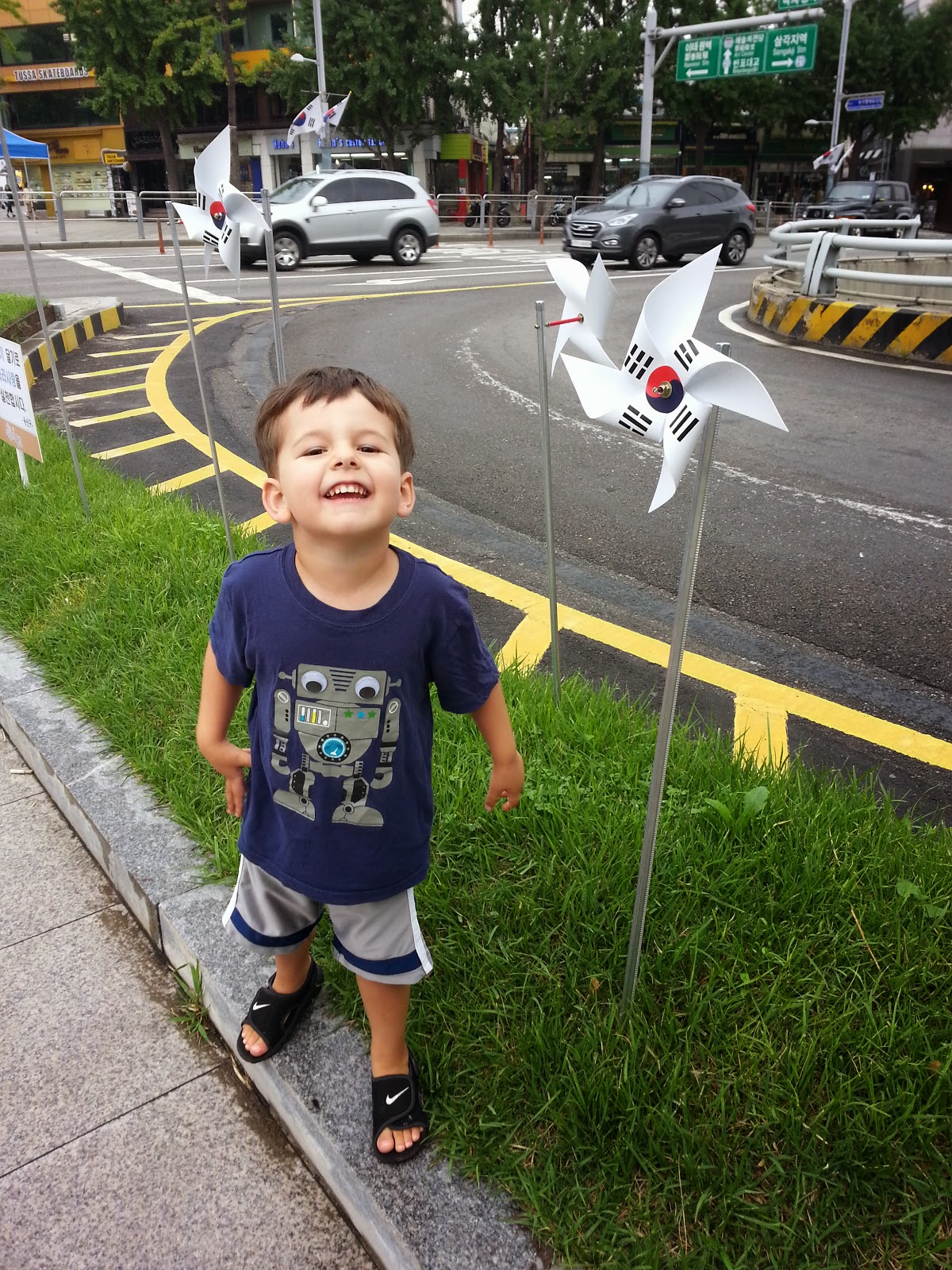
2) This past Friday, August 15th, was Gwangbokjeol, or National Liberation Day, in Korea.  Liberation Day celebrates Korea’s independence from Imperial Japan in 1945.  As a result, the town was decked out with the taegukki (태국기), or Korean flag, in very patriotic flair:


3) To celebrate the alliance between the US and ROK forces, one of the activities was a 5K held on post - Rob and Michael participated, as usual, and Michael ran just a little bit more of this one:


4) As you may or may not have known, Pope Francis was in town this weekend for numerous events, including a ceremony to beatify 124 Korean martyrs.  He gave a public mass at Gwanghwamun Square on Saturday morning, where close to 1 million people congregated. (Click here to see a pic). The subway stations nearby were closed, roads were blocked off, and the busses from all of the groups who came from out of town were lined up along the roads all the way down to where we live:


I happened to be walking towards another event at the time the crowd was finally reaching us after the mass, and this was my random Pope sighting for the day:


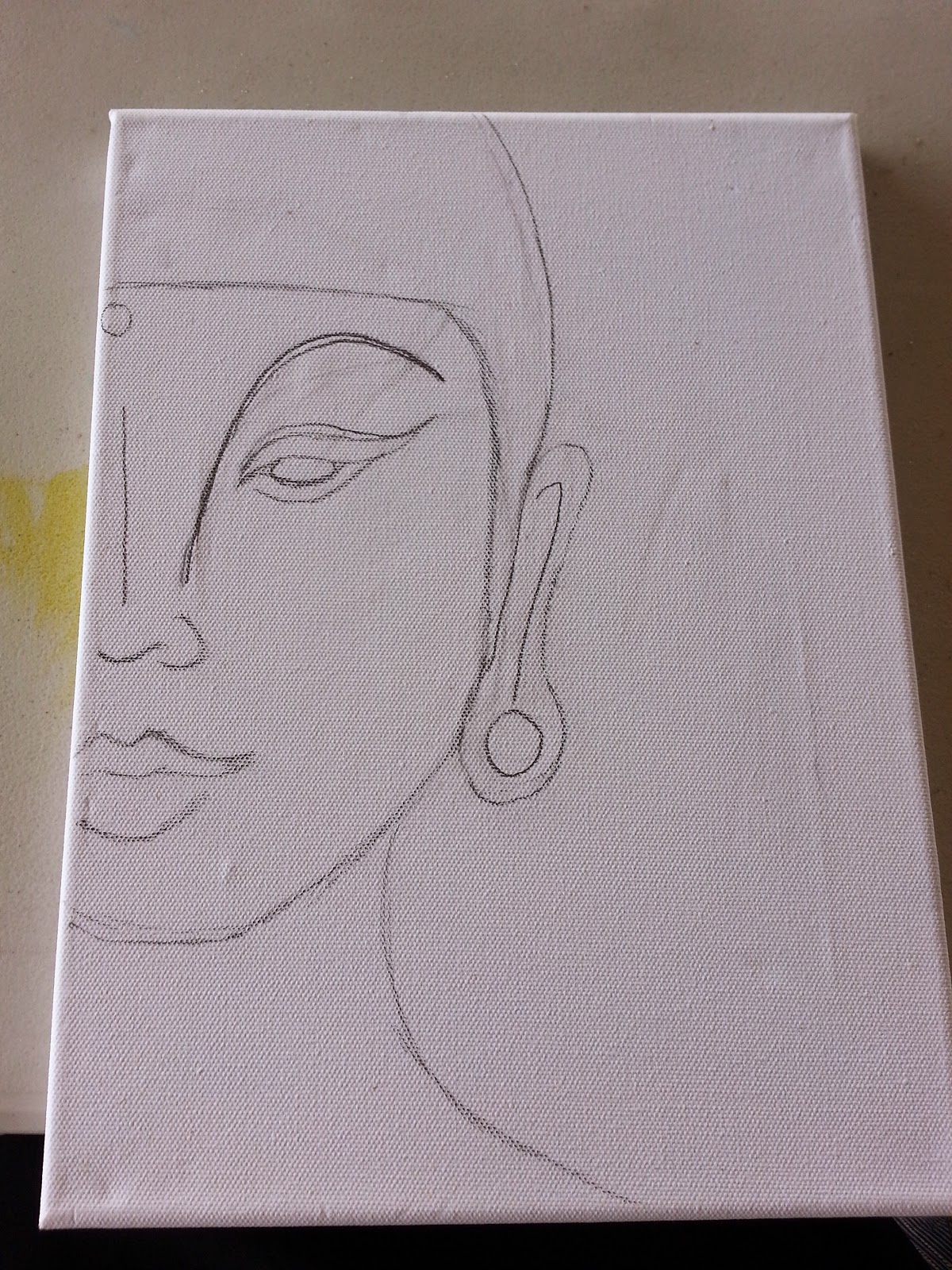
 5. Finally, Saturday ended with my first ever Sip 'n Paint event - I've seen pictures of friends attending parties in the states and was super excited to find an expat offering one down the street, aptly named "Art & Seoul". This day, the picture was of a buddha - here is the first step:

And here's what I ended up with after a few hours and a bottle of wine:


Happy Weekend!


Friday, August 15, 2014

Hiking around Changgyeonggung Palace


It wouldn't be a weekend for the Bruns Family in Korea if we didn't get out to see something new in Seoul.  This past weekend, we decided to hit up another of the palaces - so off to Changgyeonggung we went!


From their brochure and on-site signage:  
Changgyeonggung was first called Suganggung. After ascending to the throne in 1418, King Sejong built this palace for his father, former King Taejong, to live in. In 1483 the palace was expanded and other buildings were built for various queens and consorts.
At that time the palace was renamed Changgyeonggung. 

All of the buildings were burned down during the Japanese invasion in 1592 and the palace was rebuilt in 1616. In 1830 another great fire broke out and many of the palace's buildings were destroyed by fire, and these were rebuilt in 1834. The main hall called Myeongjeongjeon, however, was undamaged and the building that was rebuilt in 1616 is preserved today. It is the oldest main hall of a Joseon era royal palace, and has been designated National Treasure No. 226.

Myeongjeongjeon and courtyard

Relief  on the steps of two phoenixes in the clouds


The throne area inside the hall

Decorative ceiling above the throne with two phoenixes


On the platform that Myeongjeongjeon is built on, there are a number of these large bowls. They are called Deumeu (드므) and were used to prevent fires. They are small for that purpose and were really meant to scare away fire demons. The belief was that the fire demon would look into the water and be frightened away by its own reflection.

Behind the main building is an open pavilion called Haminjeon - this was where the king would hold meetings or scholars would meet. The ceiling inside is shaped like a well and there are four plaques written in Chinese, with lines from the poem "Sagye, the Four Seasons" by poet Tao Yuanming.

Haminjeon Pavilion


After a brief rest, we climbed up a set of stairs and found this Punggidae. It is a measuring instrument that has a long pole with a cloth hung at the end, and was used to check the speed and direction of the wind.


We also found this stunning view of old meets new...

Hiking north, we found the below shrine, called a Taesil, which the nearby sign said was where the royal family would store the placenta and umbilical cords of their children! 
This happened to be the Taeisil of King Seongjon.


After learning that fun tidbit, and keeping Michael from climbing on the turtle for a ride, we hiked down a path towards the large pond.


 But first, I couldn't resist taking a picture of this massive tree:


The pond, called Chundangji, once had rice paddies that the king would tend himself.


We ventured closer and found some friendly fish swimming along the shore.


Along the path we found this octagonal seven story stone pagoda, which was made in China in 1470 and installed here in 1911.


A smaller pond, covered in green lily pads, greeted us on our way to the glass house.


The glass house, called Daeonsil, was built in 1909 as a public botanical garden.


There are a number of plants and trees inside, as well as a small pond.


Two of my favorite bonsai trees that were there:


After a nice full visit, we trekked back to the front of the palace grounds 
and took a few more pictures.


For those living locally, you can easily find this palace by taking the subway to Hyehwa Station on Line 4.  Turn left at top of exit 4 and follow the left side of Daemyeong-gil (through a popular shopping and restaurant area) to where it ends on Changgyeonggung-ro. Veer/turn left and follow Changgyeonggung-ro for about 5 minutes. Cross the street in front of the science museum and you will see the palace wall on your right.  MAP LINK

I'll leave you with this teaser picture - the family portrait of the day - from our next adventure:  The Seoul National Science Museum.

Man, we are hot!


Tuesday, August 12, 2014

Random "Living in Korea" Stuff - The Bathroom Edition

So I have already posted about my run-in with a squatting toilet and mentioned that they have poop cookies over here in South Korea. This "random" post is dedicated to all things bathroom related that have made me chuckle or go "hmmmm".

1) Just in case anyone gets confused with a non-squatting toilet, I found this sign in one stall at a theater:


2) And for those who might get embarrassed by the sounds they are about to make, some public restrooms come equipped with "etiquette bells". Push the button and a static sound sound or music will play to cover up any other noises in the bathroom...which means everyone knows what you're doing anyway!


3) There are communal "Soap on a Stick" fixtures in many restrooms, like this one:


4) Toilet paper - is often found at a dispenser outside the actual restroom cubicle and there is usually a garbage can in the stall for you to deposit it in rather than flush it, as Korean pipes are smaller and prone to clogging. Not easy to get used to and I always make sure to have a packet of tissues on hand, just in case!

5) Remember those poop cookies?  Well there is an entire cartoon character dedicated to the substance, named Dongchimee, or Poop Man. He looks like this (and this is a tame version):


There are breads, cafes, museums, books - you name it and there is probably something poo related available.  I found an interesting article on a blog called Seoul Searching about it - "The Scoop on Poop in South Korea" - a fun read - enjoy!


Sunday, August 10, 2014

On a Bus...on a Boat...to Hanagae Beach


I didn't know how spoiled I was at our last assignment in Norfolk, with our house located only one block from the beach, until this summer in Seoul - where beaches, of course, are not a hop, skip, and a jump away. Thankfully, there are plenty of other families here who feel the need to have some summertime fun and a solution was found!

The Take a Trip Thursday group marshaled the troops (ie. our kids) onto two touring buses this past week and headed out to parts unknown for a fun day at the beach. The weather looked dismal at times, but someone must have been smiling on us, as the rain held off and the temperature didn't dip down too badly during the day. We even had a snazzy, decked out bus to ride in:


We headed west, towards the Incheon airport, and our adventure began with a quick ten minute ride on a ferry...in a bus.


The driver had to back the bus onto the ferry - kudos to him!


After that, we traveled over a winding road, up and over the island to the other side, and reached  our destination - Hanagae Beach. Not sure what Michael and his friend were doing in this next picture (left), but I'm pretty sure it was a result of the hour long bus ride.  ;)


"Hanagae Beach, the biggest tideland in Muuido Island, features a one-kilometer-long beach covered by fine, powder-like sands. Unique bungalows on the shore become floating houses when the tide comes in. When the tide goes out, the beach expands into a vast stretch of tidal flats. A large number of clams, sea snails, and crabs dwell in these tidal flats, and can be dug out with bare hands. The beach also offers splendid views of glowing red sunsets, and is popular among tourists as the filming location of the TV drama ‘Stairway to Heaven’."

All of the above is true.  Imagine our surprise when we arrived at 10:30 am to find this LARGE section of mud flats, with the water WAAAAY out there:


We had fun chasing the small fish stuck in the muddy puddles, the older kids dug up a crab or two, and we spent some time combing through the piles and piles of seashells on the beach itself.


Quite a few of us (most of us) had wandered way out to the edge of the mudflats to splash in the actual water.  We noticed the tide starting to come in, which then prompted the beach patrol to start whistling and running their sirens for us to hurry back.  We obliged, even though we didn't see what all the fuss was about.


Well, in just about 15 minutes, the tide quickly and strongly came in - and this became the new beachside view:


That made it much easier to have some splashing and swimming fun.


Some of our group were brave enough to enjoy the thrill of the zipline....maybe next time...


We opted for more splashing.


We had a nice, restful day on the beach, enjoyed a few snacks, and scoped out the sleeping huts.


Then it was time to head back to the bus for the ride home.  The tide started to go out again, and by the time we were rounding the corner to the ferry stop, this is what the shoreline looked like:


All-in-all, we had a fun day at the beach in Korea.  I snagged some pretty cool shells, including some that I've never found on a beach (my inner, shell-collecting child was very happy):


One more fun trip marked off the Korea Bucket List!